Share
Back to Media Center

How Have Women Outspent Men on Campaign Funds for Childcare at the Federal Level?
Blog
by Camryn Toner
Nov 24, 2026

Last month, Vote Mama Foundation released new data on Campaign Funds for Childcare (CFCC) spending at the federal level. This research, which analyzed campaign finance records from the Federal Election Commission (FEC) from 2018 to 2025, revealed a 649% increase in CFCC spending during this period. While we have found that CFCC is used by moms, dads, Democrats, Republicans, candidates of color, white candidates, and candidates at all levels of government, we saw an interesting spike in women’s representation when looking at women’s political participation, CFCC spending, and spending among first-time candidates. These findings highlight the importance of policies like CFCC to open doors for women, mothers, and working-class families to run for and sustainably serve in elected office, bringing an underrepresented voice to the decision-making table.

The Proportion of Women Among Congressional Candidates


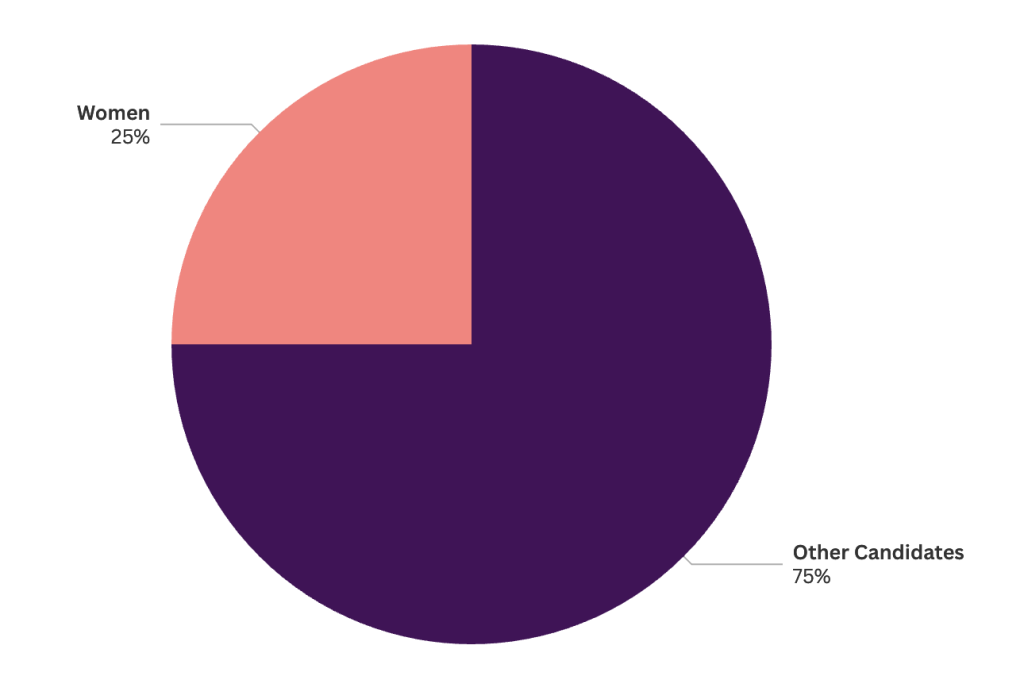
The Center for American Women and Politics (CAWP) tracks women’s representation among major-party filed congressional candidates. They found that in 2026 races, women made up 27.1% of U.S. House candidates and 23.3% of U.S. Senate candidates. Averaged together, women made up approximately 25% of congressional candidates, a slight increase from their representation among those running in 2024.


The Proportion of Women Among CFCC Users


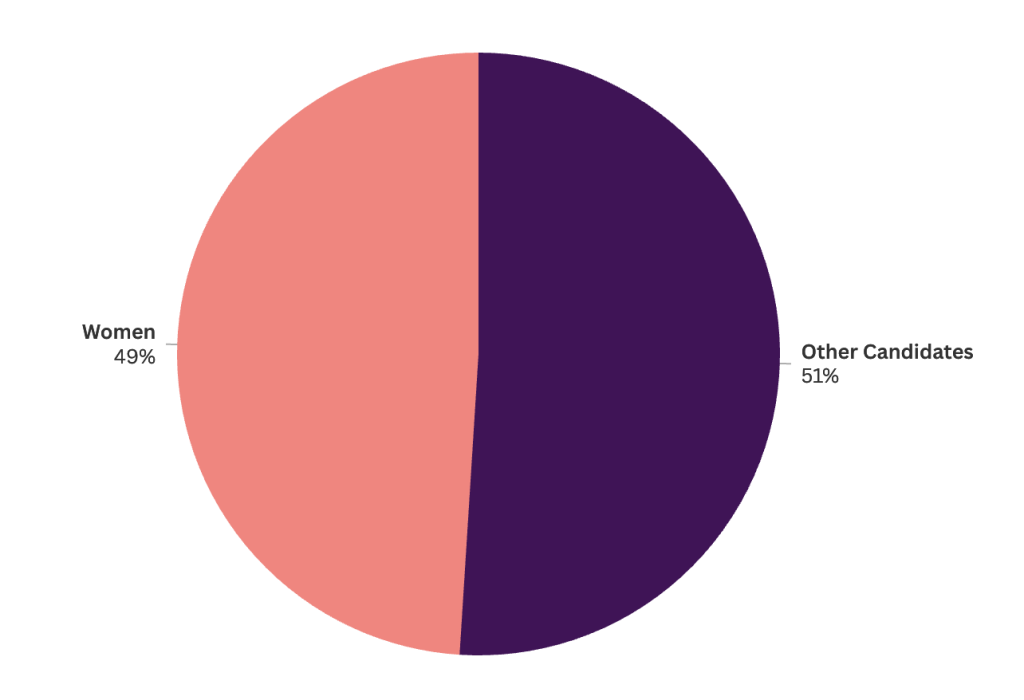
Our analysis found that of the 98 federal candidates who used CFCC between 2018 and 2025, 48 of them were women (49%). This is an almost even split between male and female CFCC users, with men accounting for the remaining 51% of candidates. When we compare women’s representation among CFCC users with women’s representation among all congressional candidates, we see that women are actually more likely to use CFCC than men because they make up less of the overall candidate pool but are evenly represented among CFCC users. In other words, 1 in 4 congressional candidates is a woman, but 1 in 2 candidates who used CFCC is a woman, making women congressional candidates more likely to use CFCC than men.

The Proportion of Women Who Used CFCC as a First-Time Congressional Candidate


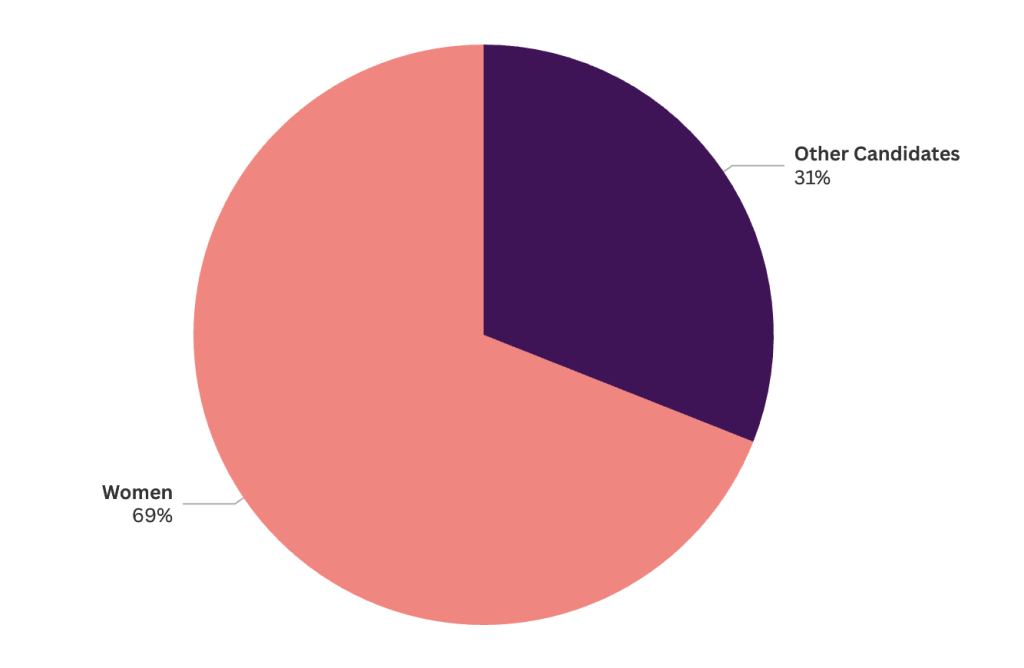
For the first time in Vote Mama Foundation’s history of Campaign Funds for Childcare research, we examined candidates who used CFCC to determine how many candidates used it during their first-ever congressional race*. Our analysis found that of the 98 federal candidates who used CFCC between 2018 and 2025, 55 (56%) were first-time congressional candidates. Furthermore, among these 55 first-time candidates, 69% were women. In relation to both women’s proportion of all CFCC candidates and all congressional candidates, this is a huge spike in representation, with women now a large majority of the group.


*We included only congressional races when determining if a candidate who used CFCC was a first-time candidate. A candidate may have previously run for a state or local office, but we would count them as a first-time candidate if the first race they used CFCC was their first congressional race.

When comparing these three proportions, we can see that women’s representation has increased significantly. These findings show that while women remain underrepresented among all congressional candidates, they are equally represented among CFCC users and overrepresented among first-time candidate CFCC users. This demonstrates that CFCC is a policy overwhelmingly used by women, and particularly by women running as first-time candidates. Running for office is a full-time job, making it almost impossible to run as a working-class individual or with a young family. While CFCC benefits all candidates, it was created to help ease these burdens and make it easier for women and moms to run and serve in office, and it is doing just that.